
Lead pipe prediction prototype
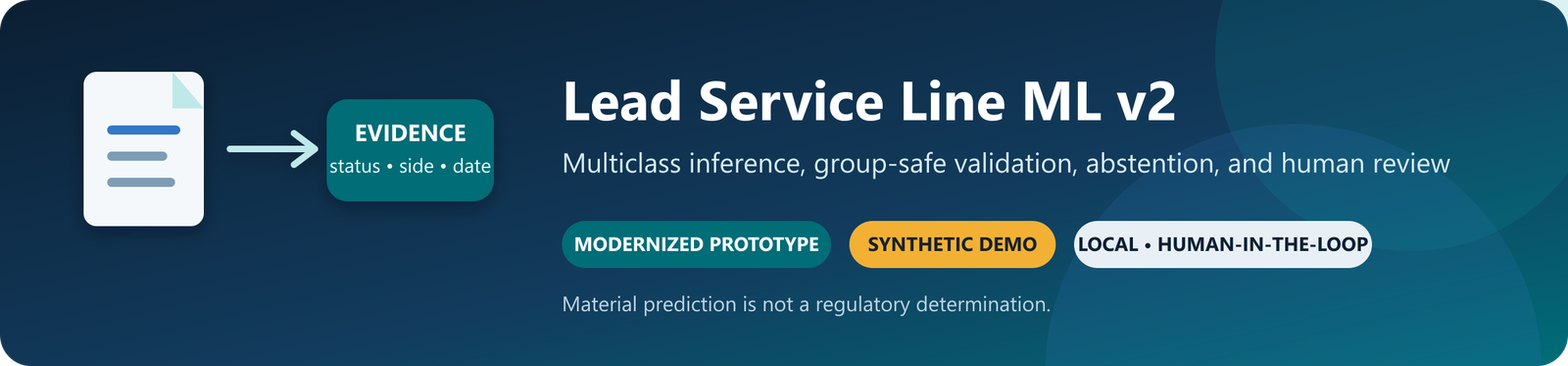
A synthetic-data prototype for predicting pipe materials and organizing human review.
What I did
I built a local prototype that combines text and structured data to predict materials and organize records for review.
Result: The prototype produces predictions and review queues, with notes explaining the models, data, and outputs.
Tools
- Python
- TF-IDF
- Logistic regression
- Gradient boosting
- Grouped evaluation
This is a local synthetic-data prototype, not a deployed utility model. The historical $1M+ estimated savings came from separate work.
Project gallery
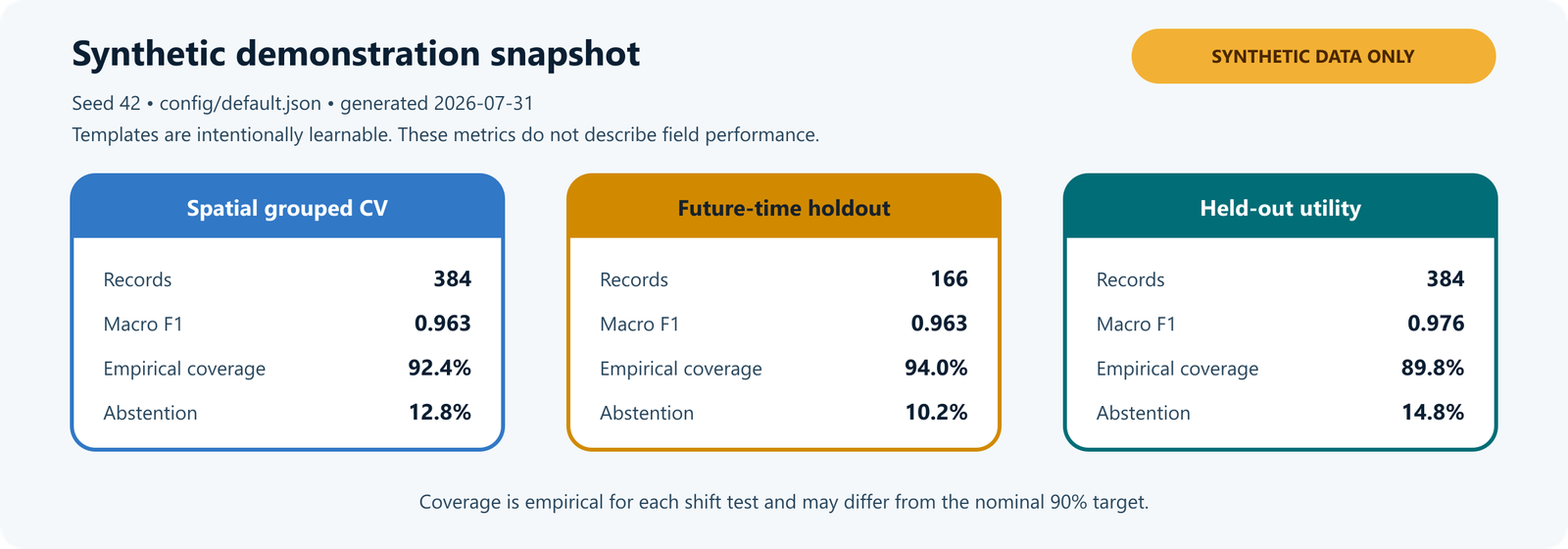
Synthetic demonstration figures; these do not show field performance. 3 images. Select an image to view it full size.
Example
Try a small prediction example
Run a simple model on invented records and compare its predictions with the known answers.
Uses invented data; separate from this project.
View exampleTechnical details
Independent prototype · Synthetic demonstration data
Document text may be incomplete or conflicting, so predictions must allow for uncertainty.
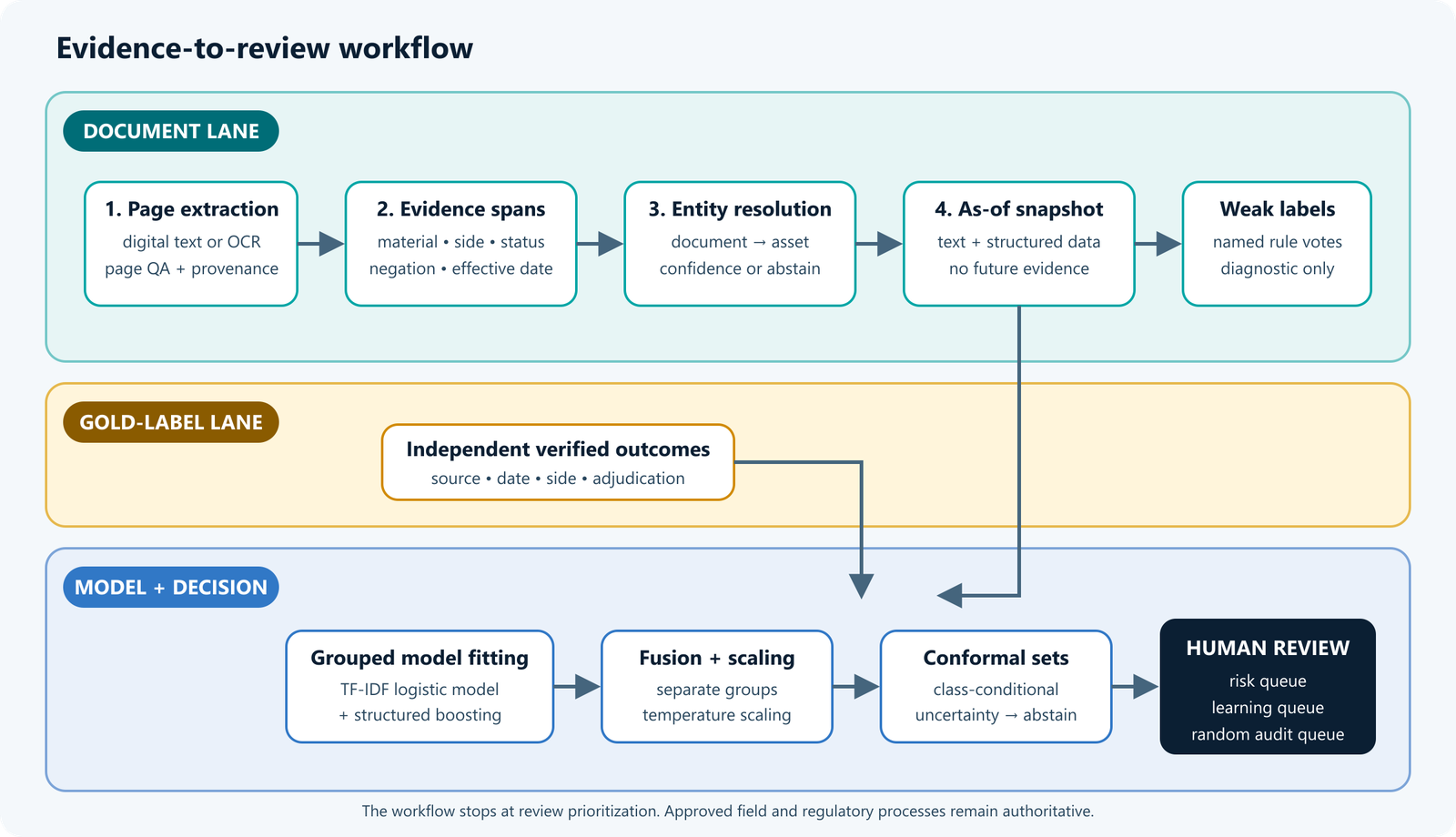
- Extract service-side, status, year, and negation details; keep rule-based guesses separate from verified labels.
- Combine TF-IDF logistic regression with gradient boosting, then calibrate predictions on separate groups.
- Test geographic, time-based, and cross-utility splits using synthetic data.
- Leave uncertain cases unresolved and create separate risk, learning, and random-check queues.
- Match records and prepare data snapshots separately from the training command.